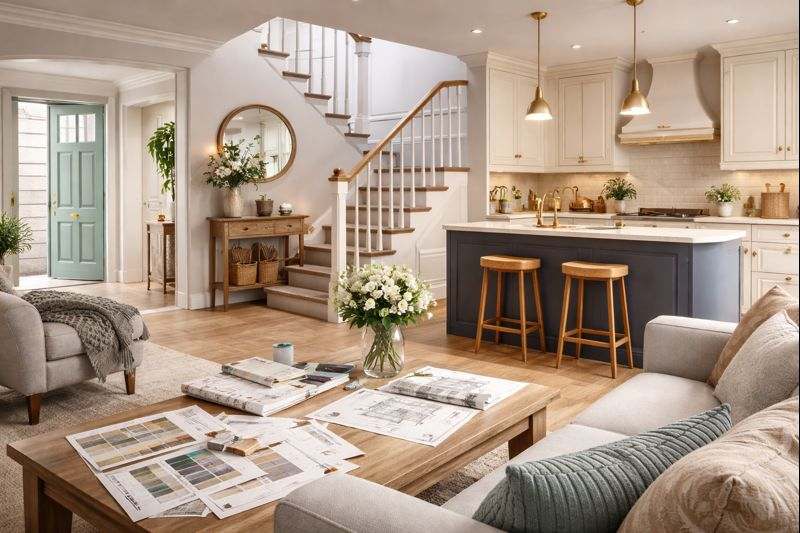
Functional interior design focuses on how people use space in daily life. UK housing styles vary in layout, size, and age. Each style needs a clear design plan that supports comfort, storage, and movement. This guide explains how to plan interiors design for common UK housing styles with simple and direct steps.
Understanding UK Housing Styles and Their Layouts
UK housing styles include terraced houses, semi-detached houses, detached houses, flats, cottages, and modern developments. Each type has specific features that affect room layout and furniture placement.
Terraced houses often have narrow layouts and limited natural light. Semi-detached houses usually offer more width and side windows. Detached houses provide larger rooms and flexible layouts. Flats often have open-plan living areas and limited storage. Cottages may have low ceilings and small rooms. Modern homes often use open layouts and large windows.
Interiors design should match the structure of the home. Designers must study floor plans, ceiling height, and window placement. This step helps create a plan that improves flow and usability.
Planning Functional Interiors Design for Terraced Houses
Terraced houses are common in UK cities and often feature narrow rooms with limited hallway space, which can make everyday movement feel restricted. Functional interior design must reduce clutter and improve flow to make these homes feel more spacious and practical. Thoughtful layouts inspired by specialists such as Molecule Designs Ltd can help homeowners maximise every square metre without compromising on style.
Using light colours on walls can make rooms feel wider and brighter, while placing furniture along walls keeps walkways clear and organised. Built-in storage under stairs and along walls is ideal for reducing visual clutter, and multi-purpose furniture such as sofa beds and extendable tables adds flexibility to compact spaces. Open-plan layouts can also help connect kitchens and living rooms, improving light flow and creating a more open, welcoming atmosphere. Mirrors can be used strategically to reflect light and enhance the sense of space throughout the home.
Designing Semi-Detached Houses for Practical Living
Semi-detached houses offer more flexibility than terraced homes. They often have side windows and larger gardens. Interiors design should use this space wisely.
Create clear zones for living, dining, and working. Use rugs and lighting to define areas. Choose storage units that fit room corners and unused spaces. Use vertical storage to keep floors clear.
Kitchens should support daily tasks. Place appliances in a logical order: fridge, sink, and cooker. Use pull-out shelves and drawers to improve access. Bathrooms should use wall-mounted units to free floor space.
Functional Interior Design for Detached Houses
Detached houses often have large rooms and multiple floors. Functional design must prevent wasted space and improve daily use.
Plan each room based on its purpose. Use family rooms for shared activities. Create quiet zones for work or study. Use storage rooms for seasonal items.
Use built-in wardrobes in bedrooms to reduce clutter. Add shelving in hallways and stair landings. Use smart lighting systems to control brightness in different areas. Choose durable materials for floors and worktops to reduce maintenance.
Interiors Design for Flats and Apartments
Flats often have limited space and shared walls. Functional interiors design must focus on storage and noise control.
Use open-plan layouts to combine living, dining, and kitchen areas. Use furniture with hidden storage, such as ottomans and storage beds. Use wall-mounted shelves to save floor space.
Use soft furnishings to reduce noise. Use curtains, rugs, and upholstered furniture. Choose compact appliances to save space. Use foldable tables and chairs for flexible use.
Cottage Interior Design for Comfort and Use
Cottages are common in rural areas. They often have small rooms, low ceilings, and original features. Functional interiors design must respect these features while improving usability.
Use light colours to brighten small rooms. Choose low-profile furniture to suit low ceilings. Use built-in seating and storage to save space. Keep original beams and fireplaces as focal points.
Use modern storage solutions that blend with traditional design. Use baskets, cabinets, and under-bed storage. Improve lighting with wall lamps and spotlights.
Modern UK Housing Styles and Functional Design
Modern homes often use open layouts and large windows. Functional interiors design should balance open space with privacy and storage.
Use partitions or sliding doors to create flexible zones. Use kitchen islands for cooking and dining. Use built-in storage along walls and under stairs.
Use smart home systems for lighting, heating, and security. Choose simple furniture with clean lines. Use neutral colours with accent tones for interest.
Key Principles for Functional Interiors Design
Functional interiors design follows clear principles that apply to all UK housing styles.
Space Planning and Layout
Plan furniture placement before buying items. Ensure clear walkways and door access. Place frequently used items within easy reach. Use zoning to separate activities.
Storage Solutions
Use built-in storage where possible. Use vertical storage such as tall cabinets and shelves. Use under-bed and under-stair storage. Choose furniture with hidden storage.
Lighting Design
Use natural light as the main source. Use sheer curtains to allow daylight. Add task lighting for kitchens and work areas. Use ambient lighting for living rooms and bedrooms.
Colour and Materials
Use light colours to increase perceived space. Use durable materials in high-traffic areas. Use easy-to-clean surfaces in kitchens and bathrooms. Use textured materials for warmth and comfort.
Furniture Selection
Choose furniture that fits room size. Avoid oversized items in small rooms. Use multi-functional furniture to save space. Choose ergonomic furniture for comfort.
Practical Tips for UK Housing Styles
Functional interiors design must address daily routines. These tips help improve usability in different UK housing styles.
Plan entryways with storage for shoes and coats. Use hallway benches with storage. Use wall hooks and shelves.
In kitchens, use pull-out bins and corner units. Use drawer organisers for utensils. Use tall pantry units for food storage.
In living rooms, use media units with storage. Use coffee tables with drawers. Use shelving for books and decor.
In bedrooms, use wardrobes with internal organisers. Use bedside tables with drawers. Use storage beds for bedding and clothing.
In bathrooms, use wall-mounted cabinets. Use mirrored cabinets for storage and grooming. Use towel rails with shelves.
Sustainable Functional Interior Design
Sustainability is important in UK housing styles. Functional interiors design can reduce energy use and waste.
Use energy-efficient lighting such as LED bulbs. Use smart thermostats to control heating. Use insulation and double glazing to reduce heat loss.
Choose sustainable materials such as wood from certified sources. Use recycled materials where possible. Choose durable products to reduce replacement needs.
Use indoor plants to improve air quality. Use natural ventilation to reduce reliance on mechanical systems.
Working with Professionals for UK Interiors Design
Interior designers, architects, and builders can help improve functional design. They can assess structure, lighting, and storage needs.
Provide clear requirements and budgets. Share floor plans and daily routines. Ask for practical solutions that match UK housing styles.
Review plans before construction or renovation. Ensure designs meet building regulations and safety standards.
Common Mistakes in Functional Interiors Design
Many homeowners make errors that reduce usability. Avoid these mistakes to improve results.
Do not overcrowd rooms with furniture. Do not ignore storage needs. Do not use dark colours in small rooms without enough light. Do not block natural light with heavy curtains or large furniture.
Do not place furniture without considering movement paths. Do not forget electrical outlets and charging points. Do not choose materials that are hard to clean.
Future Trends in UK Housing Styles and Interiors Design
UK housing styles continue to change with technology and lifestyle needs. Functional interiors design will focus on flexible spaces and smart systems.
Home offices will remain important. Designers will create multi-use rooms that support work and leisure. Smart storage systems will become more common.
Sustainable materials and energy-efficient systems will gain importance. Modular furniture and movable walls will allow layout changes.
Conclusion
Functional interiors design improves comfort, efficiency, and daily use in UK housing styles. Each housing type has unique features that affect layout and storage needs. Clear planning, smart storage, and proper lighting support practical living. Simple design choices can improve space use and reduce clutter. By understanding structure and daily routines, homeowners can create interiors that support modern life in UK homes.
 Frame The World